

Upgrade Your Kitchen. Leave Plastic Behind.
Designed to be food-safe, eco-friendly, and built for years.
Lunchbox by Series
-

SteelPro Series
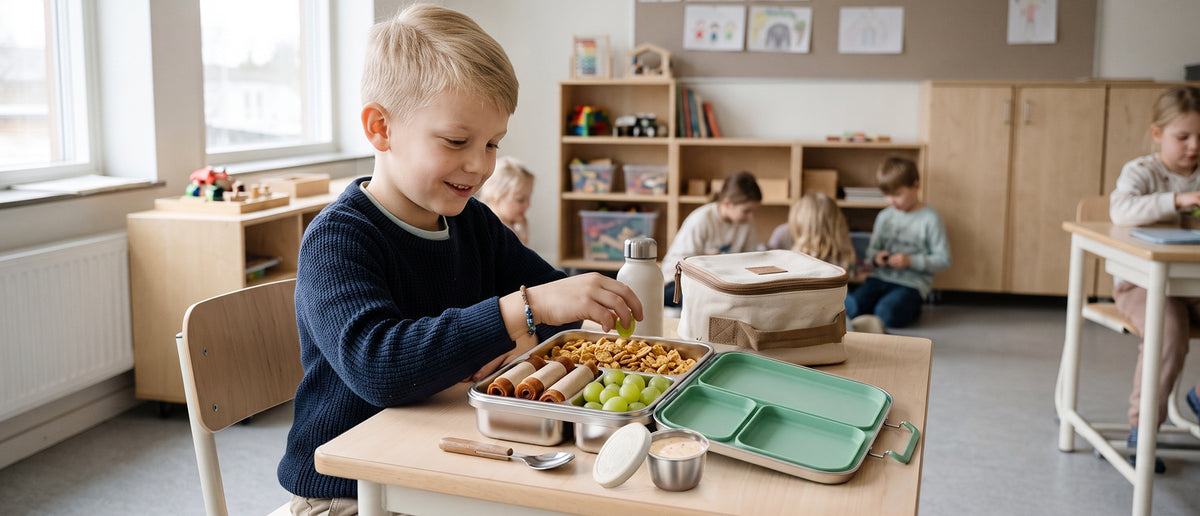
Shop SteelProDivided & leak-resistant 304 stainless steel. Ideal for balanced, nutritious meals.
-

Ridge Series
Shop RidgeDomed 304 stainless steel 3D lid for extra headroom. Perfectly fits whole apples, bagels & bakes.
-

Clear Series
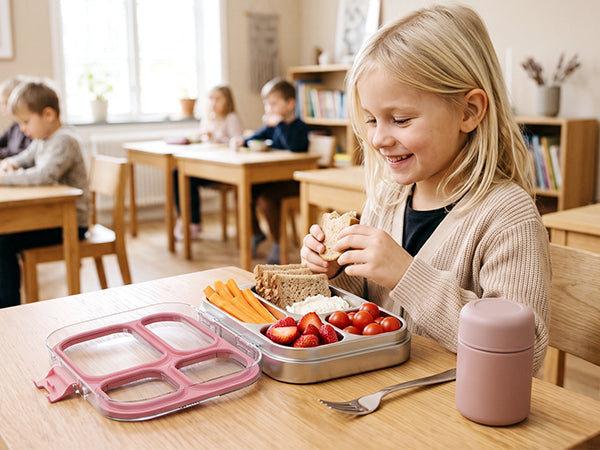
Shop ClearFood-grade 304 steel tray with a crystal-clear, BPA-free lid. High visibility for happier lunchtimes.


Shop Our Favorites
Eco-friendly, durable, and designed for daily life.


Classic Plus Lunch Box (Sage Green)


Why Start “Plastic-free” With Your Kitchen?
Scientists have found microplastics almost everywhere—even inside the human body. Cutting back starts in the kitchen: upgrade these three high-contact moments for a simple, durable, and worry-free routine.
High-Heat Contact
Heating food in plastic containers accelerates polymer breakdown—releasing up to 4.22 million microplastic particles per square centimeter.
Source: Hussain et al., Environmental Science & Technology (2023)
Mechanical Stress & Wear
Knife strokes, scrubbing, and daily mechanical stress cause plastic boards and worn containers to shed microscopic particles directly onto food.
Source: EFSA Literature Review (2025) & Yadav et al., ES&T (2023)
Repeated Everyday Storage
Even normal, repeated use of plastic food-contact items contributes to cumulative exposure. Researchers point to plastic-free kitchenware as a direct way to cut it down.
Source: Zimmermann et al., npj Science of Food (2025)